
BELFAST — Heavy plumes of smoke, charred vehicles, and the shattered glass of storefronts have left sections of Northern Ireland looking like a conflict zone. What began as a horrific, localized violent crime on Monday night has rapidly escalated into widespread civil unrest. Masked rioters have taken to the streets, public transport has been entirely paralyzed, and innocent families are being driven from their homes in what authorities are calling a wave of opportunistic, racially motivated “thuggery.”
The North Belfast Knife Attack and Video
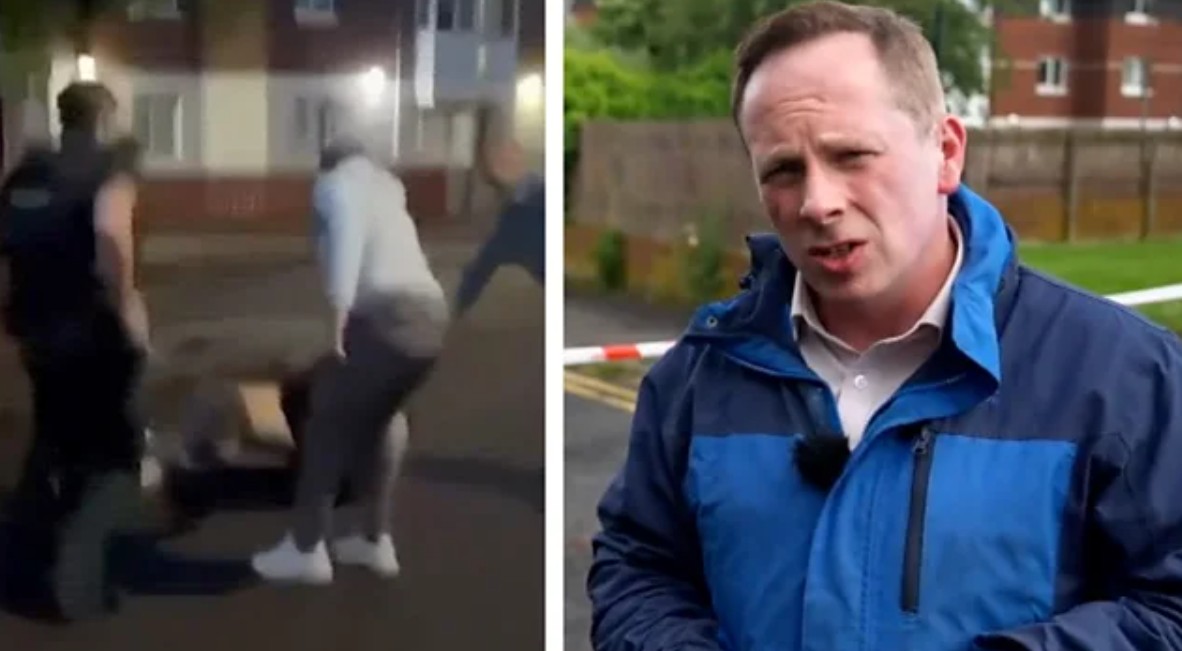
The current wave of violence was triggered by a brutal stabbing incident on Monday night, June 8, in North Belfast. At approximately 22:30 BST, emergency services were called to Kinnaird Avenue following reports of a violent assault. A man in his 40s was discovered at the scene with life-threatening injuries. He remains hospitalized in serious condition, undergoing treatment for severe wounds to his eyes, neck, and back.
Full uncensored video of the North Belfast attack
belfast-knife-attack-video.mp4
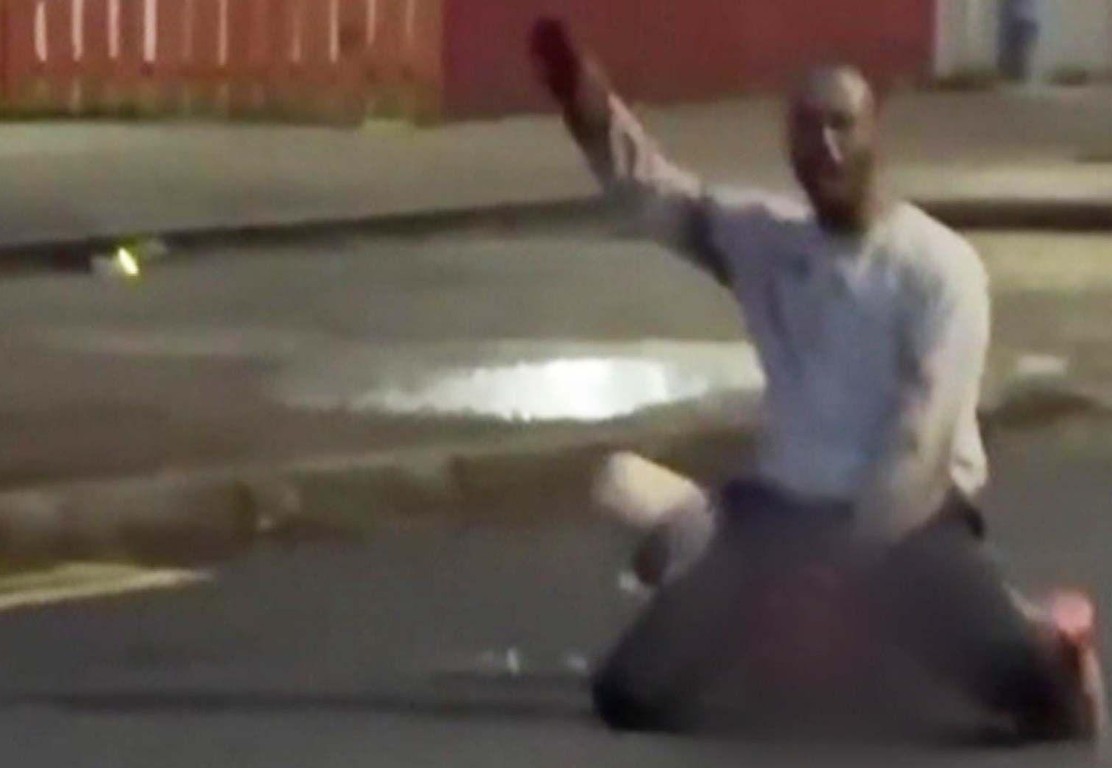
A bystander’s video, which quickly went viral across social media platforms, captured the chaotic moments immediately following the attack. The footage shows a crowd of local residents including one individual wielding a hurling stick confronting and pinned down the suspected attacker, holding him until officers from the Police Service of Northern Ireland (PSNI) arrived to make an arrest.
The suspect has been identified as a 30-year-old Sudanese national. He is scheduled to appear in court on Wednesday, facing charges of attempted murder, possession of a bladed article in a public place, and making threats to kill.
In the wake of the arrest, security databases revealed details regarding the suspect’s background. According to the Home Office, the individual entered the United Kingdom in February 2023 via the Common Travel Area. PSNI Chief Constable Jon Boutcher later clarified that the suspect had traveled from Sudan to Paris, flown to Dublin, and subsequently taken a bus to Belfast, where he claimed asylum on February 10, 2023. He was granted official refugee status that same year, with leave to remain in the UK until 2028. Chief Constable Boutcher emphasized that the suspect was completely unknown to law enforcement, with no prior record on any national security databases.
Anatomy of the Unrest: A Night of Arson and Violence
Despite swift police action and clarifications regarding the suspect’s identity including correcting an initial PSNI report that erroneously stated the man was Somali simmering tensions exploded into violence on Tuesday evening. What began as localized protests quickly fractured into “sporadic pockets of disorder” spanning multiple towns and cities across Northern Ireland. Scattered groups gathered in Londonderry, Antrim, Newtownabbey, Ballymena, Bangor, and various sectors of Belfast. While some demonstrations dissolved peacefully, several areas degenerated into outright rioting.
The destruction was particularly severe in East Belfast. On Lendrick Street, a localized mob of masked men began systematically targeting residential areas. One terrified resident recounted their experience to the BBC:
“Cars were set alight on the road, which caught fire to my house, while masked men were bashing down doors.”
A block away on Newtownards Road, a crowd of roughly 100 masked individuals roamed the streets, kicking in doors and smashing residential windows. Ulster Unionist Party (UUP) leader Jon Burrows noted with grave concern that a significant portion of the rioters appeared to be teenagers, raised on the periphery of Northern Ireland’s historical divisions and easily manipulated by online rhetoric.
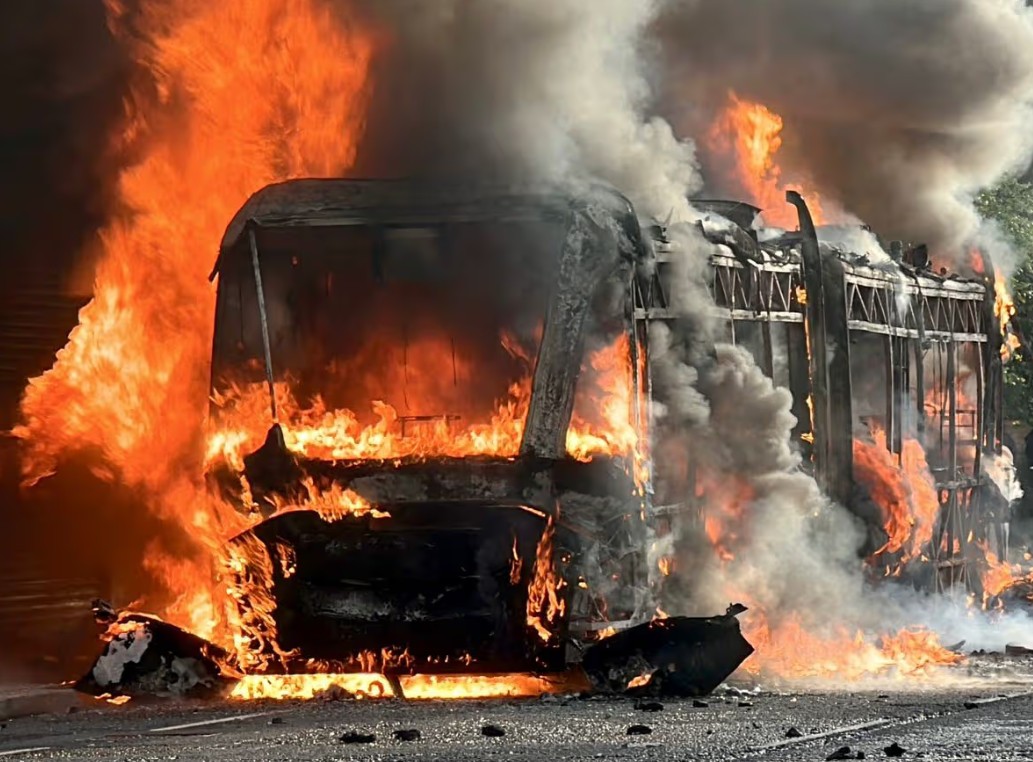
The city’s infrastructure bore the brunt of the vandalism. Public bins were overturned and set ablaze to form makeshift barricades. In a escalation of tactics, a public bus was hijacked and set on fire. This prompted an immediate, scathing condemnation from Translink, the regional transport provider, which indefinitely suspended all public bus and rail services across Belfast, leaving thousands of commuters stranded.
The emergency services found themselves pushed to their absolute limits. The Northern Ireland Fire and Rescue Service (NIFRS) reported responding to 62 distinct fire incidents on Tuesday night alone. To cope with the overwhelming demand, the NIFRS had to deploy an additional 21 fire appliances from stations across Northern Ireland to reinforce the Greater Belfast Area. Law enforcement was also heavily targeted; a police Land Rover was ambushed on Crumlin Road, and a marked police vehicle was completely incinerated at a roundabout in Portadown.
The Human Cost: Racially Motivated Displacements
As the smoke clears, the true, insidious nature of the riots has come to light. Rather than a protest against violent crime, the unrest has transformed into an anti-immigrant, racially motivated purge. Innocent minority families, entirely disconnected from the Monday night stabbing, have found themselves directly in the crosshairs of the mobs.
In South Belfast’s Sandy Row district, a commercial premises reportedly a Turkish barber shop was set on fire while a group of onlookers dressed in dark clothing watched.
The human toll of this displacement was captured by Jack McKee, a local Christian pastor who has spent decades working in the community. Pastor McKee intervened to help terrified families fleeing their burning neighborhoods. Visibly shaken, McKee spoke out against the xenophobic undercurrent driving the violence:
“Members of my church, who have been with us for 20 years, are being put out of their homes tonight simply because they’re black. I’m angry and disappointed that this is the response of people in our community.”
“Hate Cannot Win”: Political Leaders Stand United
Faced with the worst civil unrest the region has seen in years, Northern Ireland’s deeply divided political landscape has closed ranks in total condemnation of the lawlessness. Earlier on Tuesday, the leaders of Northern Ireland’s five main political parties issued an unprecedented joint statement, expressing absolute solidarity in their disgust over the original knife attack, while drawing a hard line against the subsequent street violence.
First Minister Michelle O’Neill was unyielding in her criticism of the rioters, pointing out the hypocrisy of using a violent crime to justify further atrocities.
“The attack in north Belfast was heinous and wrong,” O’Neill stated. “But there are dangerous attempts to exploit that tragedy to target and attack innocent people. Seeing groups of masked men burning families out of their homes is outright thuggery.”
Deputy First Minister Emma Little-Pengelly echoed these sentiments, directly addressing the anger felt by the public while pleading for an immediate end to the riots. “I know all are horrified about what has happened I know so many are angry and there are those who want to register a protest,” she said. “But this is an appeal to act in an entirely peaceful way. Violence does not advance any cause; it damages it.”
Justice Minister Naomi Long vowed that those responsible for the arson and intimidation would face the full force of the law, asserting that there is “no place for masked thugs” in Northern Ireland. She added a poignant reminder to the public: “While I recognize and understand the concerns following on from the attack in north Belfast, hate cannot be allowed to win.”
From London, Northern Ireland Secretary Hilary Benn released a statement affirming that “there is no justification at all for this type of destruction and thuggery,” promising full federal backing for the local executive. Meanwhile, Independent MLA Doug Beattie, who personally witnessed the remains of the torched police car in Portadown, warned that attacking law enforcement
As Wednesday dawns, a massive emergency response framework remains active across Greater Belfast. The immediate focus shifts toward the courts, where the 30-year-old Sudanese suspect will officially face the charges laid against him.
However, the primary challenge for the PSNI lies in holding the fragile peace on the streets. Assistant Chief Constable Ryan Henderson has issued an urgent appeal to “voices of influence within local communities” to step forward, de-escalate tensions, and actively discourage youth involvement in further disorder. Chief Constable Jon Boutcher has confirmed that an aggressive, heavily augmented police presence will remain visible on the streets over the coming days to suppress any further attempts at rioting.
Northern Ireland stands at a delicate crossroads. The coming days will test whether community resilience and political unity can triumph over the coordinated whispers of hatred and fear.