
VALPARAÍSO, CHILE — In a powerful stand against digital violence and privacy violations, Chilean Senator Camila Flores (National Renewal party) has publicly addressed. Taking to social media on Monday afternoon, the prominent parliamentarian did not mince words, directly pointing the finger at her estranged ex-husband, Percy Marín, whom she accuses of orchestrating the leak out of spite amidst a bitter, ongoing divorce.

The incident has sparked widespread outrage across Chile’s political spectrum, casting a harsh spotlight on the intersection of political life, domestic disputes.
The Accusation and Demand for Accountability
On Monday, social media platforms and local messaging networks were flooded with unauthorized, deeply private images of Senator Flores with her new partner. Rather than retreating from the public eye, Flores released a video statement confronting the violation head-on.
Camila Flores’ full video leaves everyone stunned
“I expect this to be investigated with the same rigor that I have been investigated,” Flores stated, emphasizing the double standards public figures often face when their privacy is violated. “It is incredible what spite and a lack of understanding can achieve.” By demanding equal rigor, Flores is putting Chile’s legal system to the test, forcing a conversation on how cyber-crimes and emotional retaliation are handled under the law.
Autonomy, Ownership, and the Right to Move On
Beyond the legal ramifications, Senator Flores used her platform to deliver a poignant message regarding personal autonomy, gender dynamics, and the boundaries of past relationships. She fiercely rejected the notion that a woman remains bound to her past partner’s ego or control.
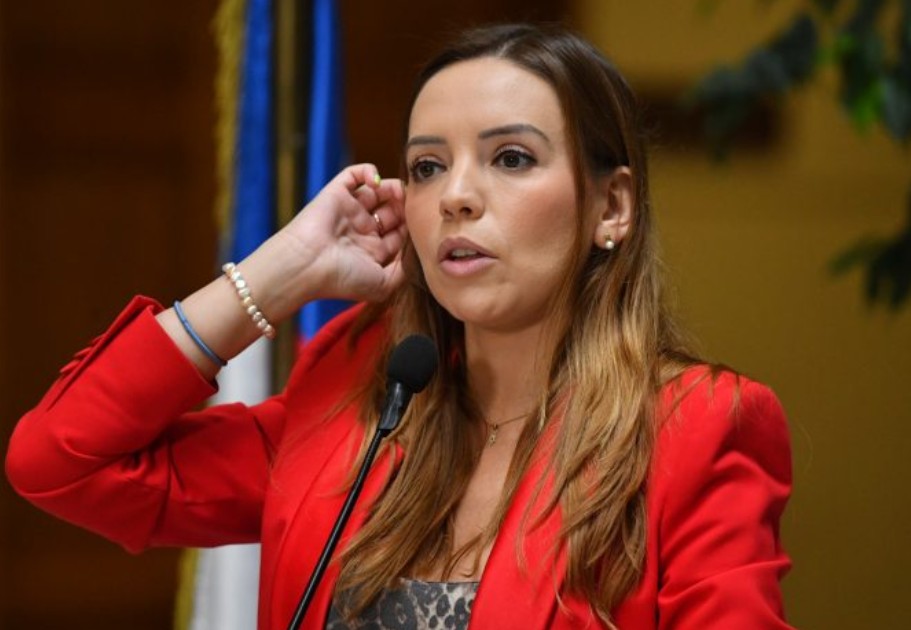
“When a relationship simply ends, it does not mean you have the right to destroy the other person’s life,” Flores argued.
She went on to challenge deep-seated patriarchal mindsets regarding ownership in marriages:
Human Autonomy: “A person, whether a man or a woman, is the property of no one.”
The Right to a New Beginning: “Everyone has every right to rebuild their life.”
The Senator’s remarks resonate deeply in a society currently grappling with shifting cultural paradigms surrounding women’s independence. Her words frame the photo leak not merely as a private grievance, but as a systemic issue where former partners refuse to accept a woman’s right to choose her own path forward.
A History of Escalation: Domestic Violence and Forced Eviction
To fully understand the gravity of the current situation, one must examine the turbulent timeline leading up to Monday’s leak. According to Senator Flores, the unauthorized release of these photographs is not an isolated incident of malice, but rather the latest escalation in a long history of domestic friction.
Flores revealed that on December 15 of last year, Percy Marín was forced to leave their shared family residence by law enforcement. “He had to leave our common home by force because he flatly refused to go voluntarily,” she recalled.
This eviction was the direct result of legal action taken by Flores, who had filed a formal complaint against Marín for intrafamily violence (VIF – violencia intrafamiliar). The transition from alleged physical or psychological boundary-crossing within the home to digital warfare online highlights a classic pattern observed by domestic abuse experts: when physical control is lost, the abuser often resorts to destroying the victim’s public reputation.
Reflecting on the exhausting nature of the ordeal, Flores posed a sobering question that echoes the frustrations of countless victims of harassment:
“¿Qué más tiene que pasar para que un hombre entienda que una mujer simplemente no quiere estar con él?”
(“What more needs to happen for a man to understand that a woman simply does not want to be with him?”)
The Legal Backdrop: A Contentious Fault-Based Divorce
The malicious leak coincides with a highly sensitive and ongoing legal battle between the two political figures. Flores, a prominent militant of the right-wing Renovación Nacional (National Renewal) party, is currently locked in a bitter fault-based divorce lawsuit (demanda por divorcio culposo) against Marín.
Under Chilean law, a divorcio culposo can be granted when there is a severe breach of matrimonial duties—such as violence, desertion, or continuous behavior that makes shared life intolerable—making one party legally “at fault” for the breakdown of the marriage. The stakes are incredibly high, not just politically and socially, but personally, as Marín is also the father of Flores’ young daughter.
Legal experts suggest that the timing of the leak may not be coincidental. In high-stakes divorce and custody battles, the temptation to use character assassination as leverage is a well-documented tactic. However, by turning the leak into a public criminal accusation, Flores has shifted the narrative, transforming herself from a targeted victim into an active seeker of justice.
Digital Violence Against Women in the Political Sphere
The ordeal faced by Senator Flores highlights a broader, global crisis: technology-facilitated gender-based violence (TFGBV). When women achieve positions of political power, they become frequent targets of highly gendered attacks.
By addressing the public directly through a video statement, Senator Flores effectively stripped the leaked images of their power to shame her. Her transparency transforms a private violation into a public defense of digital privacy laws, bodily autonomy, and the right of women to live free from intimidation, both online and offline.
As the judicial system prepares to investigate the source of the leak, the public eye remains fixed on how Chile’s institutions will handle a case where the boundaries of technology, politics, and domestic law collide. Flores’ resilience sends a clear message to victims across the country: silence is no longer an option when privacy is weaponized.