
LOS ANGELES — In a digital landscape where shock value often reigns supreme, veteran celebrity gossip blogger Perez Hilton has once again crossed a definitive line. Known historically for pioneering the culture of internet celebrity snark in the mid-2000s, Hilton recently shocked followers and casual scrollers alike during a live broadcast on TikTok. The stream, which rapidly escalated from eccentric behavior into grotesque performance art, featured Hilton covered in fake blood while engaging in erratic, disturbing antics that have since ignited a fierce backlash across multiple social media platforms.
The Descent into Madness and Video
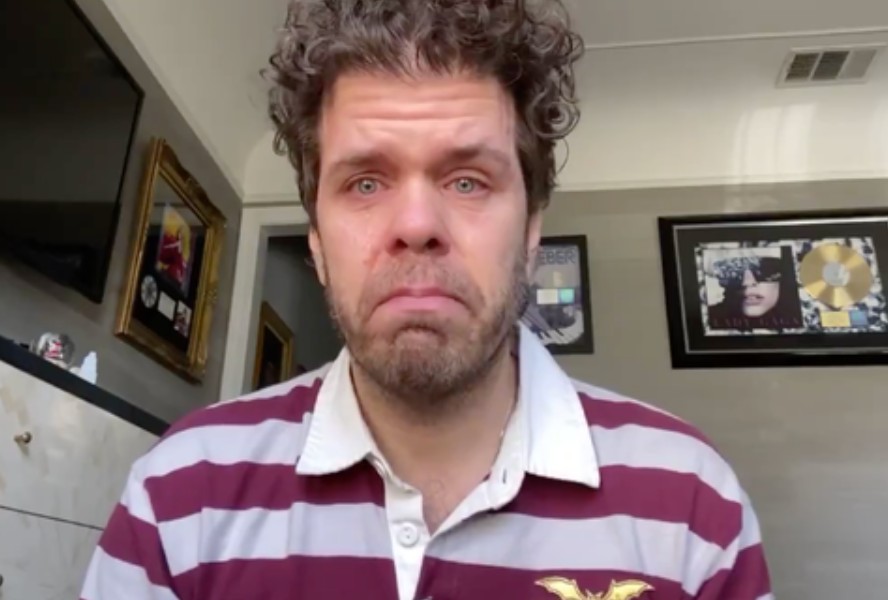
The broadcast began under the guise of a typical, albeit casual, check-in with his remaining fanbase. However, viewers quickly realized that the atmosphere was charged with an unsettling, chaotic energy. Hilton, broadcasting from what appeared to be a home office or living space, was visibly agitated and overly animated, pacing back and forth while monitoring the rapidly climbing viewer count.
Perez Hilton full live video on Tiktok
As the minutes ticked by, the broadcast took a sharp, surreal turn. Hilton produced containers of bright red liquid—initially suspected to be theatrical stage blood—and began pouring it over his head and smearing it across his face and clothing. What followed was a prolonged period of erratic behavior that left his audience bewildered and deeply disturbed.
Rather than maintaining a coherent dialogue, Hilton alternated between manic laughter, incoherent shouting matches with unseen individuals or chat moderators, and staring blankly into the camera lens with blood dripping down his forehead. At various points during the stream, he writhed on the floor, knocked over nearby furniture, and delivered nonsensical monologues targeting various unnamed public figures and internet trolls.
The visual spectacle of a well-known media personality completely unspooling in real time created a car crash effect. Within minutes, thousands of users flooded the chat room, oscillating between morbid curiosity, confusion, and genuine concern for his psychological well-being.
The Immediate Social Media Backlash
Platforms like X (formerly Twitter), Reddit, and Instagram immediately erupted into a firestorm of commentary. Screen recordings and clips of the blood-soaked broadcast were clipped, shared, and analyzed by millions of users within hours of the stream ending.
Public reaction was sharply divided into three distinct camps: outrage, concern, and exhaustion.
Severe Criticism and Disgust: A significant portion of social media users condemned Hilton’s stunt as desperate, grotesque, and irresponsible. Critics pointed out that TikTok’s live algorithm frequently pushes content to younger, impressionable demographics. Exposing minors to graphic imagery—even if explicitly fake—was labeled by many as a reckless bid for attention.
Mental Health Concerns: Another faction expressed genuine worry, arguing that Hilton was exhibiting symptoms of a severe mental health crisis or a breakdown brought on by years of navigating the toxic side of internet fame. Supporters and neutral observers alike questioned whether friends or family members were nearby to intervene.
Accusations of Stunt Publicizing: A cynical third group dismissed the entire episode as a calculated, albeit bizarre, PR stunt. Given Hilton’s history of courting controversy to maintain relevance in an evolving media landscape, many veterans of internet culture viewed the spectacle as a manufactured crisis designed to game the algorithm and drive engagement metrics.
The Changing Face of Perez Hilton’s Career
To understand the magnitude of this recent TikTok meltdown, one must look at the trajectory of Perez Hilton’s career over the past two decades. Born Mario Armando Lavandeira Jr., Hilton rose to fame in the mid-2000s with his celebrity gossip blog, PerezHilton.com. Armed with a penchant for digital cruelty, MS Paint doodles (notably drawing semen, tears, and crude remarks on photographs of celebrities), and a relentless output of snark, he became one of the most feared and influential figures in Hollywood media.
During the peak of the tabloid blog era—alongside sites like TMZ, Dlisted, and Gawker—Hilton helped shape a particularly vicious brand of celebrity culture. However, as cultural norms shifted away from public body-shaming, cyberbullying, and harassment in the late 2010s, Hilton found himself increasingly out of step with modern audiences.
Attempts to rebrand as a kinder, gentler internet personality and a dedicated father largely fell flat, weighed down by the long shadow of his past behavior, which included targeting young stars like Britney Spears, Lindsay Lohan, and Miley Cyrus during their most vulnerable moments. In recent years, Hilton has pivoted heavily toward short-form video platforms like TikTok, YouTube Shorts, and Instagram Reels, where the pressure to remain viral often pushes creators toward increasingly extreme content.
The Algorithmic Trap and the Death of Nuance
Industry analysts and digital culture experts are viewing the Perez Hilton incident as a textbook case of the “algorithmic trap.” On platforms heavily reliant on watch time, shock value, and immediate emotional reactions, aging creators from older eras of the internet often struggle to maintain baseline engagement.
Traditional blog posts and thoughtful commentary no longer yield the explosive financial returns or visibility that they once did. Instead, platforms reward disruption, unpredictability, and spectacle.
By going live and engaging in grotesque performance art, Hilton tapped directly into this algorithmic feedback loop. The more people expressed horror and confusion in the chat, the more the platform pushed the stream out to broader audiences. It is a modern tragedy of the digital age: a creator who helped build the architecture of modern internet cruelty now finding himself trapped and consumed by its final, most degenerate iterations.
TikTok’s Content Moderation Dilemma
The broadcast also places fresh scrutiny on TikTok’s live moderation practices. While automated filters and human moderators are generally quick to flag and ban streams depicting actual violence or self-harm, performative chaos often occupies a frustrating gray area.
Because the blood used by Hilton was clearly theatrical and no physical harm was overtly inflicted on himself or others, the stream managed to evade immediate termination in its early stages. However, safety advocates argue that the emotional toll and the exposure of graphic, disturbing aesthetics to children violate the spirit, if not the strict letter, of community guidelines.
As of press time, TikTok has not issued a formal statement regarding specific disciplinary actions against Hilton’s account, though several clips of the broadcast have been systematically scrubbed for violating policies regarding disturbing imagery.
A Call for Intervention or Just Another Chapter in Internet Infamy?
Whether Perez Hilton’s latest stunt is viewed as a cry for help or a pathetic cry for attention, it underscores a darker truth about the modern creator economy: the relentless pursuit of relevance can lead individuals to strip away their remaining dignity entirely.
For years, Hilton defined the boundaries of bad taste on the internet. In a tragic twist of irony, he has now become a casualty of the very monster he helped create—performing a blood-soaked spectacle for an indifferent digital crowd that watches, records, scrolls away, and forgets before the stream has even ended.
As the dust settles on this latest social media firestorm, one thing remains certain: the appetite for digital car crashes shows no sign of slowing down, and creators willing to sacrifice their last shreds of credibility to feed the beast will continue to find an audience, even if that audience is watching purely out of disbelief.