
TOLEDO, Spain — At least 68 people were killed and dozens more injured after two high-speed trains collided on Spain’s Madrid-Seville railway line on Wednesday morning, according to regional officials. Authorities warned that the death toll could rise as emergency crews continued searching the wreckage and investigators worked to establish the circumstances surrounding the disaster.
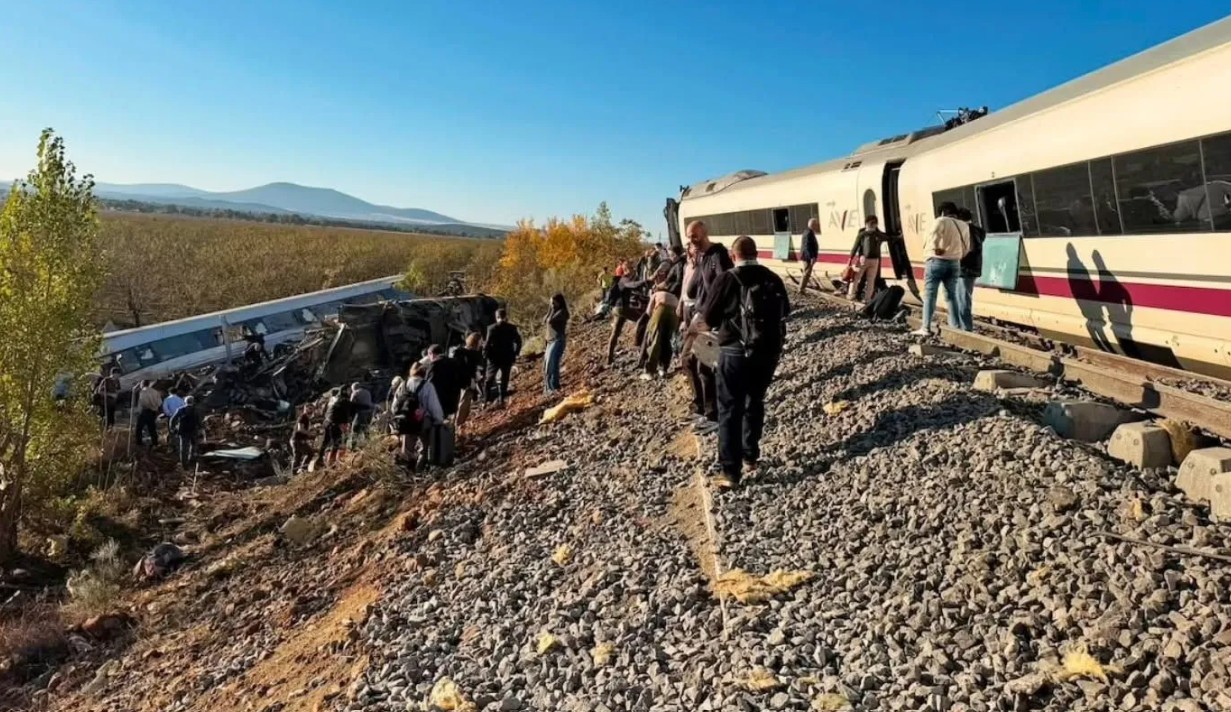
The collision occurred at approximately 8:30 a.m. local time near kilometer marker 118, between Urda and Los Yébenes in the province of Toledo, Castilla-La Mancha. According to information provided by Spain’s Transport Ministry to ABC News, the incident involved a Renfe train and an Iryo train, both traveling from Madrid toward Seville.
The crash prompted a massive emergency response involving firefighters, medical personnel, police officers and military rescue teams. Survivors described scenes of destruction inside the carriages, with passengers screaming for help, broken windows and injured travelers struggling to escape.
The preliminary investigation has raised serious questions about railway traffic management and the procedures used when a technical failure disrupts normal train operations. Spain’s Transport Minister Óscar Puente said early findings pointed to a decision by railway controllers that allowed trains to resume movement without speed restrictions after a computer malfunction had interrupted traffic.
Preliminary Investigation Points to Railway Control Decisions and Video
During a news conference on Wednesday, Transport Minister Óscar Puente described the collision as “truly unbelievable,” emphasizing the unusual sequence of events that investigators were examining.
Spain Train Crash Full Video
According to Puente, a computer failure initially caused six moving trains, including the two involved in the collision, to stop. Under normal procedures, the railway control center assumes responsibility when the system experiences a failure.
However, Puente said the control center subsequently authorized trains to move again without imposing speed restrictions. One train resumed its journey while the Iryo train remained stationary farther ahead on the tracks.
The Renfe train then struck the stationary Iryo train from behind, according to the preliminary account provided by the minister.
Authorities said the impact caused two carriages to derail and plunge down an embankment. The force of the collision left several carriages severely damaged, complicating rescue efforts and making it difficult for emergency personnel to reach some passengers.
Investigators are expected to examine railway signaling records, computer systems, communications between train operators and traffic controllers, and the decisions made immediately before the crash.
Although officials have outlined a possible sequence of events, the investigation remains ongoing. The precise technical circumstances, the responsibilities of individual personnel and whether established safety procedures were followed have not yet been definitively established.
Regional authorities have promised a thorough examination of the incident, including whether negligence or failures in railway safety systems contributed to the tragedy.
Dozens Killed and More Than 60 Injured
The human toll was devastating. Emiliano García-Page, president of the Castilla-La Mancha region, said at least 68 people had died. At least 15 people were seriously injured and transported to nearby hospitals, while more than 50 others were hospitalized with less severe injuries.
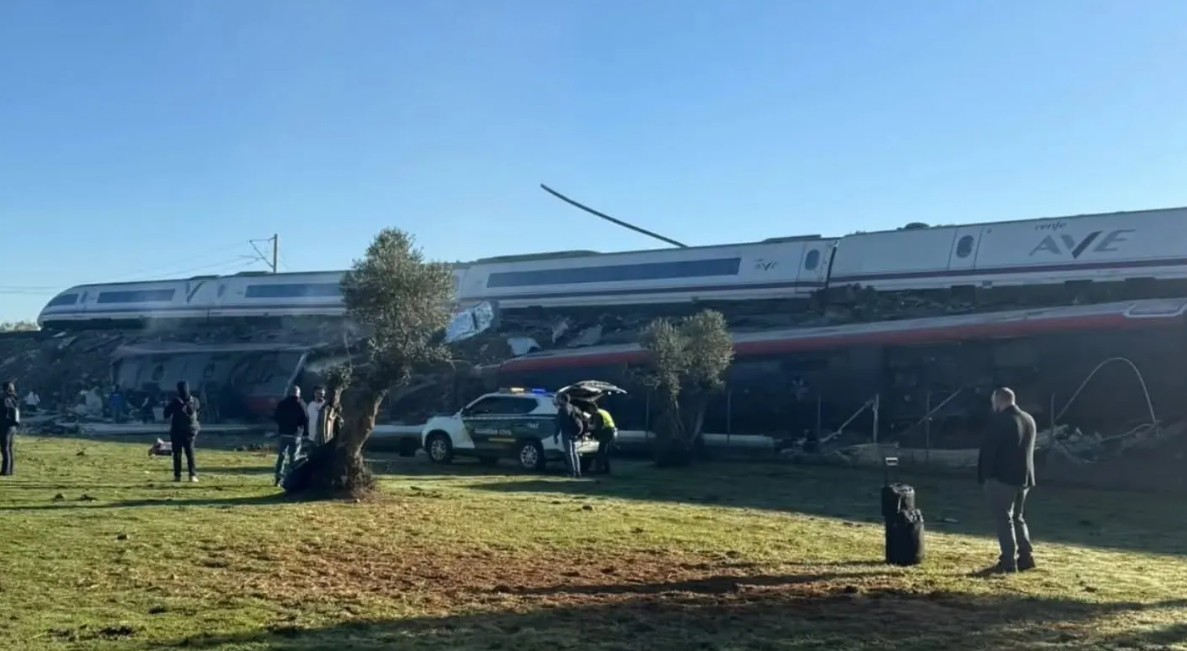
According to García-Page, 24 of those killed were found aboard the Renfe train, with the remaining fatalities reported on the Iryo train.
Rescue teams continued searching the wreckage as officials warned that the final death toll might change. Specialized personnel, including search-and-rescue teams using trained dogs, were deployed to locate victims who might remain trapped inside damaged carriages or beneath debris.
The number of passengers aboard the trains added to the scale of the emergency. Spain’s Transport Ministry said the Iryo service was carrying 146 passengers, including a baby, while the Renfe train had 397 passengers on board.
Emergency services established response operations around the crash site, while nearby medical facilities received injured passengers. Authorities also worked to identify victims and provide information to relatives searching for missing family members.
The condition of the damaged carriages and the severity of the impact made the rescue operation particularly challenging. Some passengers managed to escape through broken windows, while others required assistance from firefighters and emergency personnel.
Survivors Describe Moments of Terror
Passengers who survived the collision offered accounts of the sudden impact and the confusion that followed.
Miguel Ángel Pérez, who was traveling in the last carriage of the Renfe train with work colleagues, told Spain’s public broadcaster RTVE that passengers had been informed that the train was stopping because of an overload on the track.
The train later began moving again.
Pérez said the collision happened shortly afterward, producing an immense impact that caused the train to move violently and derail. The carriage tilted, leaving passengers frightened and disoriented as they tried to understand what had happened.
He described the experience as a terrible few seconds that transformed an ordinary journey into a life-threatening emergency.
Another survivor, an American tourist identified as Dire, was traveling with his wife toward Andalusia. The couple had also been aboard the train that stopped before the collision.
Speaking to Spanish television channel Canal 24 Horas, Dire recalled a sudden crash that sent objects flying through the carriage. When he looked outside, he saw extensive destruction.
Passengers were screaming and crying, and some were covered in blood. Fearing that the train might overturn, he told his wife they needed to get out immediately.
His account illustrated the fear and uncertainty passengers faced as they attempted to escape from damaged carriages without knowing whether further danger was imminent.
Another passenger, Ana, who was traveling with her sister and dog, told Reuters that she suddenly heard screams when the collision occurred. She sustained injuries to her face and leg, while her sister was also injured.
Ana said passengers broke windows in an effort to escape. Firefighters eventually pulled her from the wreckage, and she was transported to a hospital by ambulance.
She recalled seeing people with injuries of varying severity, including passengers who appeared to be dying while others struggled to help them.
Her account highlighted the emotional trauma experienced by survivors who witnessed the aftermath at close range.
Spain Faces Renewed Questions About High-Speed Rail Safety
The disaster has renewed scrutiny of Spain’s high-speed railway network, which connects major cities and carries millions of passengers.
The crash was described by regional officials as the second major high-speed rail tragedy in Spain during the same year. In January, two trains operated by Renfe and Iryo were involved in another collision near Adamuz, in the province of Córdoba, killing 46 people.
In that incident, authorities said one train derailed before another collided with the derailed carriages.
The similarities between the two incidents have prompted questions about whether broader safety concerns need to be addressed. Both crashes involved trains operated by the same companies, although officials cautioned against assuming that the accidents shared the same cause.
García-Page stressed that determining whether the incidents were connected was a matter for the independent railway accident investigation commission.
He said the causes of the two accidents appeared to be unrelated based on the information available at the time, but emphasized that investigators must establish the facts.
The latest collision was also described as Spain’s deadliest high-speed train crash since the 2013 derailment in Galicia, northwestern Spain. That accident killed 80 people and injured more than 170 when a train traveling from Madrid to Ferrol derailed.
The 2013 disaster had already prompted extensive examination of railway operations and safety procedures. Wednesday’s collision has again raised concerns about how Spain can maintain public confidence in its high-speed network.
García-Page said authorities would take further measures if necessary to strengthen safety and restore confidence in rail travel. He also pledged that any negligence or deficiencies identified during the investigation would be addressed.
Government and Royal Family Express Condolences
Spanish Prime Minister Pedro Sánchez traveled to the crash site on Wednesday as the government coordinated its response.
In a statement shared on social media, Sánchez said he was shocked by the serious train accident in Toledo and extended solidarity to the victims’ families and those who had been injured.
He emphasized that assisting victims and supporting their relatives remained the government’s immediate priority.
Spain’s government subsequently declared three days of official mourning, from Thursday through Saturday, to honor those killed and injured in the collision.
King Felipe VI also expressed condolences in a statement, offering sympathy, support and affection to families facing what he described as an exceptionally difficult time.
The government’s response included coordination between national and regional authorities, emergency services and healthcare institutions.
Health Minister Mónica García said the government was mobilizing available resources and working with the Castilla-La Mancha regional administration to provide whatever assistance was needed.
She also expressed gratitude to emergency personnel working at the scene.
Meanwhile, Iryo confirmed that its service 6076, traveling from Madrid to Seville, had been involved in the accident near Urda. The company said it had activated its emergency protocols and was cooperating with the relevant authorities.
All Iryo services departing from Madrid-Puerta de Atocha along the Southern Corridor were canceled following the collision. The company did not provide an estimate for when normal service would resume.
The disruption affected passengers traveling through one of Spain’s important railway corridors, while authorities focused on rescue operations and the investigation.
American Citizens Injured in the Crash
The United States Department of State confirmed that several American citizens were injured in the collision.
A department spokesperson said the State Department and the U.S. Embassy in Madrid were working closely with local authorities to assist affected Americans.
The department also expressed condolences to the families and loved ones of everyone affected by the disaster.
American citizens requiring assistance, as well as those concerned about relatives or friends traveling in Spain, were encouraged to contact U.S. officials.
As of the latest information provided in the initial reports, the State Department had not indicated that any American citizens were among those killed.
The involvement of international travelers added another dimension to the emergency response, as officials worked to establish the identities and conditions of passengers and communicate with their families.
Investigation Continues as Spain Mourns
As rescue operations continued, authorities faced the difficult task of recovering victims, supporting survivors and determining exactly how the two trains came to collide.
Investigators will need to reconstruct the sequence of events, including the computer malfunction, the initial stoppage of multiple trains and the subsequent decision to permit movement without speed restrictions.
The findings could have significant implications for railway traffic management, emergency procedures and the safeguards designed to prevent collisions when signaling or control systems fail.
For now, officials have emphasized that conclusions must be based on evidence rather than assumptions. The independent investigation will be central to determining the causes of the crash and identifying any changes needed to prevent a similar tragedy.
The collision has left families grieving, survivors coping with physical injuries and psychological trauma, and the country confronting renewed questions about railway safety.
With at least 68 people reported dead and dozens more injured, the disaster stands among the most devastating rail accidents in Spain in recent decades.
As the country observes its period of mourning, the immediate priority remains supporting those affected and completing the rescue operation. The longer-term challenge will be to establish accountability where warranted and ensure that any identified safety weaknesses are addressed.
For the victims and their families, the investigation may eventually provide answers about how an ordinary train journey ended in catastrophe. For Spain’s railway system, its findings will be essential to restoring confidence in the safety of high-speed travel.