
On the morning of August 21, 2023, a packed courtroom in Cuyahoga County, Ohio, sat in heavy, suffocating silence as a nineteen-year-old girl learned she would spend the defining decades of her youth behind bars. Mackenzie Shirilla, dressed in civilian clothes and visibly trembling, was sentenced to 15 years to life in prison. Her crime was not one of youthful indiscretion or reckless negligence, but a chillingly calculated double murder executed using a vehicle as a lethal weapon. The ruling concluded a legal saga that began a year earlier with a horrific car crash, a tragedy that initial responders might have mistaken for a devastating accident, but which investigators quickly uncovered to be a brutal act of intentional violence.

The victims of the crash were Dominic Russo, aged twenty, Shirilla’s boyfriend, and his close friend Davion Flanagan, nineteen. Both young men died instantly amid the mangled metal of a Toyota Camry, their futures violently erased in a matter of seconds. Shirilla, who was seventeen at the time of the incident, miraculously survived the impact with severe injuries. The subsequent trial transfixed the nation, offering a terrifying window into how a toxic, volatile teenage relationship could escalate into premeditated homicide. Through an intricate web of digital forensics, surveillance recordings, and emotional testimony, prosecutors systematically dismantled the defense’s narrative of a tragic mishap, exposing instead a deliberate journey into darkness.
The Fatal Crash and Video
The quiet suburb of Strongsville, Ohio, was shattered in the pre-dawn hours of July 31, 2022. At approximately 5:30 AM, Mackenzie Shirilla was driving her Toyota Camry through an industrial park a location devoid of heavy traffic at that hour. Sitting in the passenger seat was Dominic Russo, and in the back seat was Davion Flanagan. For reasons that would take months to fully validate in a court of law, Shirilla made a sudden, catastrophic decision that transformed the mundane vehicle into a missile aimed directly at a solid brick building.
The video recording of Mackenzie Shirilla’s accident left people in disbelief
mackenzie-shirilla-car-video.mp4
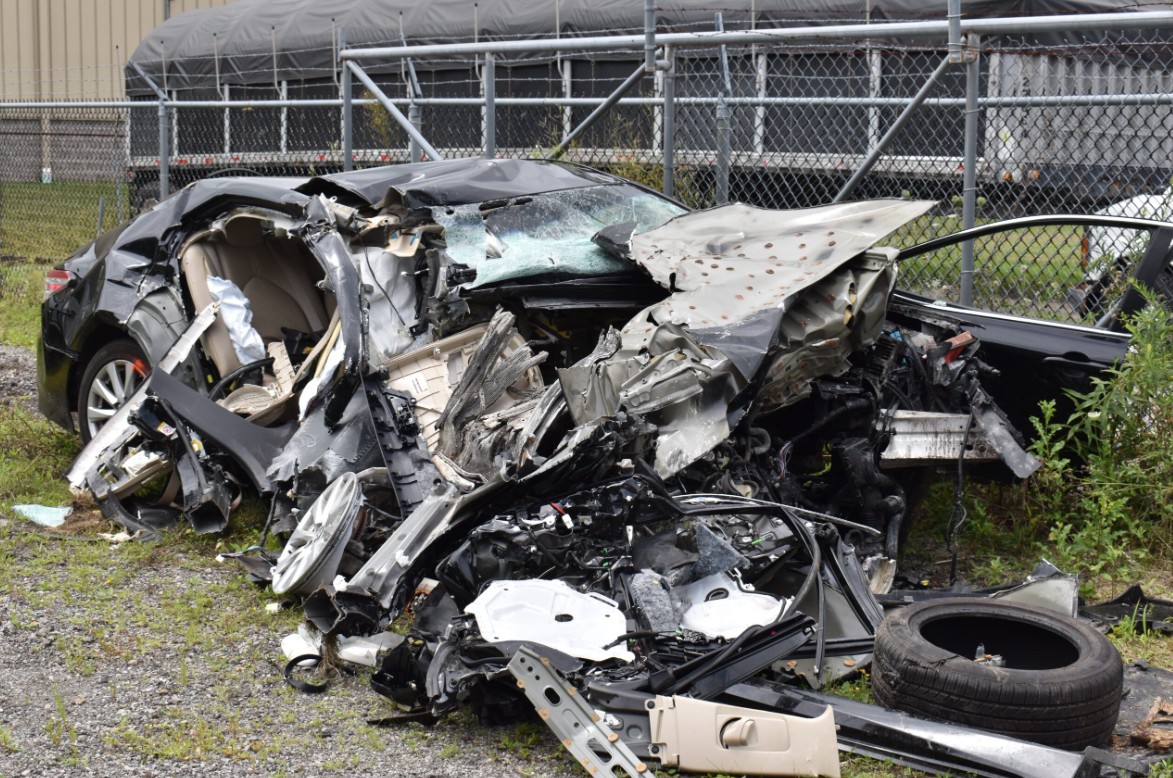
The technical metrics compiled by accident reconstruction experts paint a terrifying picture of the vehicle’s final moments. Shirilla accelerated the Camry down a straightaway, reaching an astronomical speed of 100 miles per hour. As the vehicle barreled toward the brick wall of a commercial warehouse, there was no attempt to swerve, no mechanical hesitation, and critically, absolutely no deployment of the brakes. The car slammed into the structure with full kinetic force. The impact was catastrophic, collapsing the front engine bay into the passenger compartment and causing unsurmountable trauma to the occupants.
When emergency services arrived at the apocalyptic scene, the devastation was immediate. Dominic Russo and Davion Flanagan were pronounced dead where they sat, having sustained fatal blunt-force trauma upon impact. Shirilla was trapped inside the wreckage, unconscious but alive. She was rushed to a local trauma center with severe injuries, including multiple fractures. As the community reeled from what appeared to be a heartbreaking summer accident involving local youth, a team of dedicated investigators began looking closer at the physical evidence left behind, sensing that the scene did not align with a standard loss-of-control traffic incident.
The Prosecution’s Case: Proving Intent Over Recklessness
The pivotal turning point in the judicial process lay in the legal distinction between recklessness and specific intent. The defense team argued that Shirilla was an inexperienced, reckless teenage driver who lost control of her vehicle under emotional distress. To secure a murder conviction, the prosecution had to prove beyond a reasonable doubt that Shirilla acted with purposeful malice that she intended to cause the deaths of her passengers when she pressed her foot firmly onto the accelerator.
The state’s case was anchored heavily on a wealth of irrefutable scientific and digital evidence. Foremost was the vehicle’s event data recorder, or “black box.” The digital forensic download revealed that in the final five seconds leading up to the impact, the throttle was depressed at one hundred percent capacity, and the steering wheel was held perfectly straight. The data confirmed that the lack of braking was not a mechanical failure but a human choice. Furthermore, security surveillance footage captured from a nearby business showed the Camry accelerating exponentially right before the crash, moving with a chillingly clear trajectory toward the brick wall.
Beyond the physical mechanics of the crash, prosecutors established a powerful psychological motive rooted in the toxic, highly volatile relationship between Shirilla and Russo. The state produced an extensive paper trail of text messages, audio recordings, and social media data detailing a pattern of domestic dysfunction. Witnesses testified that Shirilla possessed an obsessive, controlling fixation on Russo. Most damaging of all were recovered recordings and testimonies proving that during an argument just weeks prior to the crash, Shirilla had explicitly threatened to crash her car while Dominic was inside it. This history transformed the events of July 31 from an inexplicable anomaly into the premeditated execution of a long-standing threat.
On August 14, 2023, following an intense bench trial, Judge Nancy Margaret Russo delivered a scathing, definitive verdict. Rejecting all assertions of vehicular manslaughter or simple recklessness, the judge convicted Shirilla of 12 counts, including aggravated vehicular homicide and murder. In her closing statements, Judge Russo delivered a quote that would define the media coverage of the trial, describing Shirilla’s actions as purposeful, cruel, and calculated, famously labeling the teenager as “literal hell on wheels.”
Sentencing and the Controversy of Remorse
The sentencing hearing on August 21, 2023, served as a dramatic arena where the reality of the punishment collided with the defense’s attempts at mitigation. When given the opportunity to speak, Mackenzie Shirilla offered a tearful, highly emotional apology to the victims’ families. Sobbing openly, she claimed that she suffered from profound amnesia regarding the crash, asserting that she had no memory of the final moments or why she drove into the wall. She asked for mercy, stating that her heart was broken over the loss of Dominic and Davion.
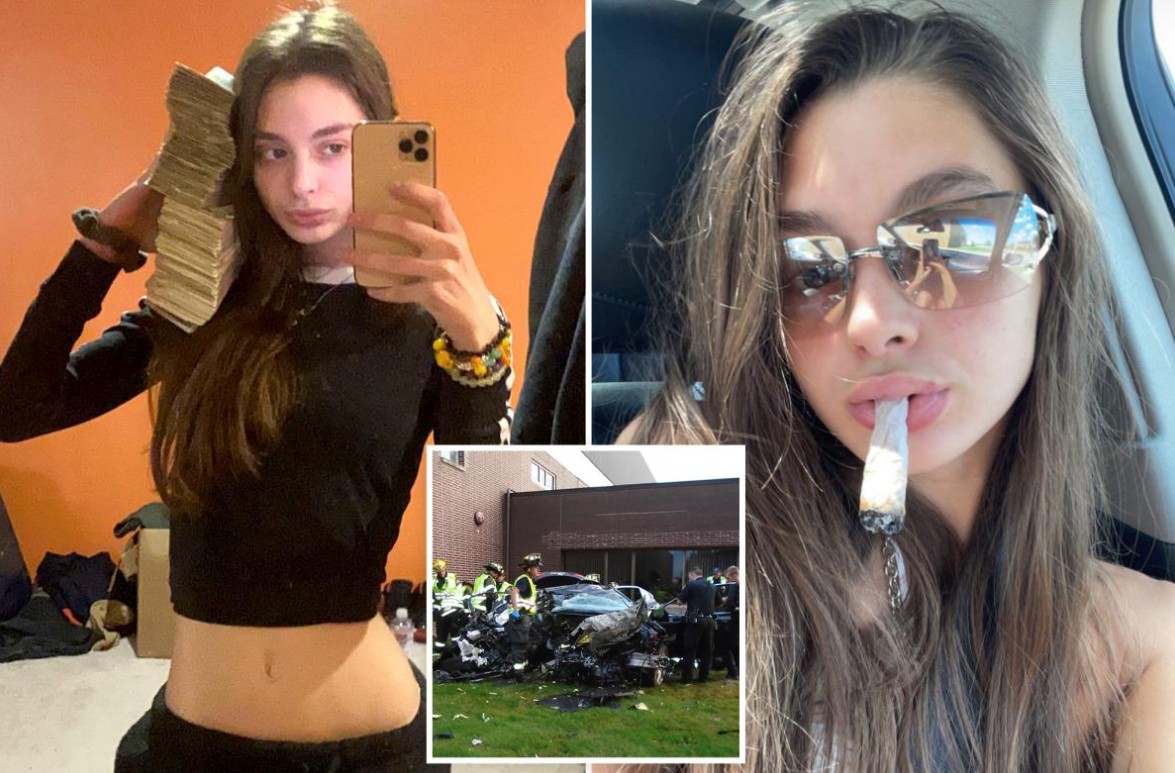
However, the prosecution vigorously contested the validity of her tears, pointing to a disturbing pattern of post-crash behavior as evidence of a total lack of genuine remorse. The court was presented with evidence that in the months following the double homicide, while out on bail and awaiting trial, Shirilla had routinely engaged in celebratory social activities. This included attending a high-profile music concert and posting videos on social media platforms, including TikTok, where she appeared carefree and dismissive of the gravity of the legal charges against her. To the state and the judge, these actions spoke far louder than her eleventh-hour tears in the courtroom.
Ultimately, Judge Russo determined that a severe penalty was required to satisfy the demands of justice. She sentenced Shirilla to life in prison with the possibility of parole after fifteen years. Crucially, the sentences for the two counts of murder were ordered to be served concurrently rather than consecutively, meaning she would begin her eligibility review after fifteen calendar years. In addition to the prison sentence, the court imposed a mandatory lifetime driving ban, ensuring that Shirilla would never legally operate a motor vehicle again, stripping away the tool she had used to inflict such absolute devastation.
A Fractured Community: Grief, Anger, and Unexpected Mercy
The human cost of Shirilla’s actions was laid bare through the victim impact statements delivered by the grieving families. The courtroom heard from a succession of broken individuals whose lives had been permanently altered by the loss of two promising young men. Christine Russo, the mother of Dominic, spoke with profound grief about her son’s stolen future, describing the unbearable emptiness of a home missing a vibrant child and expressing anger at the calculated nature of his death. Similarly, Davyne Flanagan, the sister of Davion, demanded absolute justice from the bench, highlighting that her brother was an innocent bystander who had simply caught a ride with friends, only to be caught in the crosshairs of a toxic relationship.
Yet, amidst the intense anger and palpable heartbreak, an unexpected note of profound human complexity emerged from within the victims’ circle. Frank Russo, Dominic’s father, took a dramatically different stance that stunned many observers in the courtroom. Displaying a rare and complex form of mercy, he spoke of Shirilla not with absolute vitriol, but with a nuanced sense of tragic sorrow. “She’s just a little kid,” Frank Russo stated to reporters outside the courtroom. “She f—ed up. It ruined her life, and it ruined our lives. It’s just a tragedy all around.” His words highlighted the agonizing reality of the situation: that a teenager had destroyed multiple families, including her own, in a single moment of uncontrolled malice.
The Legal and Social Aftermath
Following her conviction and sentencing, Mackenzie Shirilla’s defense team attempted to overturn the decision, filing an appeal that challenged the sufficiency of the state’s evidence regarding premeditation and intent. However, the legal system held firm. In September 2024, an Ohio appellate court officially upheld her murder conviction, ruling that the combination of black box metrics, past threats, and surveillance footage provided more than enough substantial evidence to support the original verdict. The ruling effectively sealed her fate, exhausting her primary legal avenues for immediate release.
The Mackenzie Shirilla case remains a haunting case study in modern criminal jurisprudence and the devastating potential of toxic adolescent relationships. It stands as a stark warning about the lethal intersection of emotional instability and high-powered automobiles. Years after that fateful July morning, the town of Strongsville and the families of Dominic Russo and Davion Flanagan continue to wrestle with the painful aftermath. The empty chairs at family dinner tables and the cold brick wall in the industrial park remain permanent, silent monuments to a moment when anger took the wheel, and “hell on wheels” became a literal, heartbreaking reality.